
ENDPOINT PROTECTION
The primary function of Endpoint Security is to detect, prevent, and respond to threats targeting end-user devices. It performs several combined functions, including:
• Malware and Virus Protection: Similar to traditional antivirus, but modern Endpoint Security offers advanced capabilities such as Behavioral Analysis to detect previously unknown threats (Zero-day attacks) and Fileless attacks.
• Data Loss Prevention (DLP): Prevents an organization's critical data from being copied, transferred, or removed from endpoint devices without authorization.
• Vulnerability Management: Scans and alerts for vulnerabilities in the operating systems and software on endpoint devices, allowing for immediate updates and patching.
• Detection and Response:
o Endpoint Detection and Response (EDR): A solution that continuously monitors activity on endpoint devices and collects data to help administrators investigate, analyze, and rapidly respond to threats.
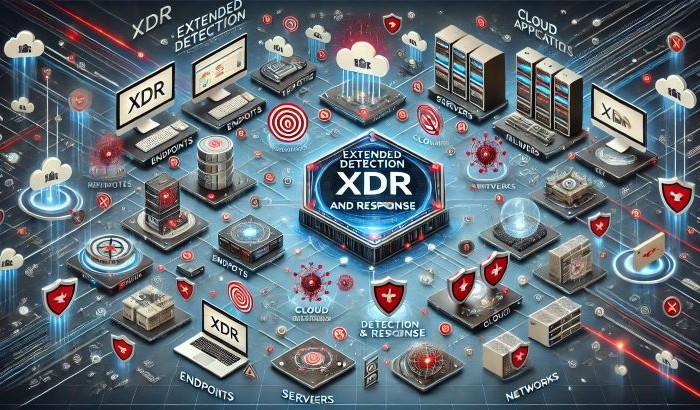
o Extended Detection and Response (XDR): An evolution of EDR that expands the scope of detection across multiple sources, such as network, cloud, and email, to provide a broader view of an attack's overall narrative.
• Access Control: Controls who can access which data and applications to minimize the risk of unauthorized access.
Why Endpoint Security is Critical
In an era of increased work flexibility and increasingly sophisticated cyber threats, Endpoint Security is paramount to organizational safety. It serves as the front line defense protecting the network from threats that may enter via employee devices. It effectively minimizes the risk of attacks, data loss, and subsequent financial or reputational damage to the organization.
Endpoint Security vs. Traditional Antivirus: A Key Distinction
While both Endpoint Security and Antivirus share the goal of protecting devices from threats, they differ significantly in scope and functionality.
Antivirus (Traditional Program)
| Feature | Description |
|---|---|
| Scope | Primarily focuses on preventing malware and viruses. Operates on a single, standalone device. |
| Detection Method | Signature-based: Detects known threats by matching files against a database of virus "signatures." If a file matches a signature, it is blocked or deleted. |
| Heuristics: Uses rules and behaviors to detect previously unknown malware. | |
| Weaknesses | Less effective against new threats (Zero-day attacks) lacking signatures. |
| Cannot prevent other complex attacks like Fileless attacks or exploits targeting system vulnerabilities. | |
| Generally lacks centralized management, making it suitable for home users or very small organizations. |
| Feature | Description |
|---|---|
| Scope | A much more comprehensive and integrated solution, with traditional Antivirus being only one component. |
| Detection Method | Behavioral Analysis: Analyzes abnormal program or user behavior on the endpoint to detect unknown (Zero-day) threats. |
| Machine Learning & AI: Uses artificial intelligence to learn and predict complex threats. | |
| Enhanced Functions | Endpoint Protection Platform (EPP): A platform combining various protection functions (Antivirus, Firewall, external device control (USB), web attack protection). |
| Endpoint Detection and Response (EDR): A core capability allowing administrators to investigate, analyze, and rapidly respond to threats (e.g., isolating an infected device or rolling back the system state to pre-attack). | |
| Centralized Management: Administrators can control, configure, and monitor all devices across the network from a single console, simplifying management for large organizations. | |
| Data Loss Prevention (DLP): Prevents sensitive data from leaving the organization without authorization. | |
| Vulnerability Management: Scans and reports software vulnerabilities on devices. |
| Key Difference | Antivirus | Endpoint Security |
|---|---|---|
| Threat Focus | Mainly focuses on malware and viruses. | Covers all types of threats (malware, ransomware, phishing, fileless attacks, etc.). |
| Detection | Primarily uses signatures (Signature-based). | Primarily uses behavioral analysis, Machine Learning, and AI. |
| Management | Stand-alone installation and management on a single device. | Offers Centralized Management for all devices in the organization. |
| Response | Deletes or quarantines infected files. | Includes advanced investigation, analysis, and response capabilities (EDR). |
| Best For | General home users or very small organizations with few devices. | Organizations of all sizes that require comprehensive and easily manageable security. |
To give you a better experience, by continuing to use our website, you are agreeing to the use of cookies and personal data as set out in our Privacy Policy | Terms and Conditions